Sweden Pouch Cell Lab Line: The Essential Foundation for a Reliable Pouch Cell Pilot Line
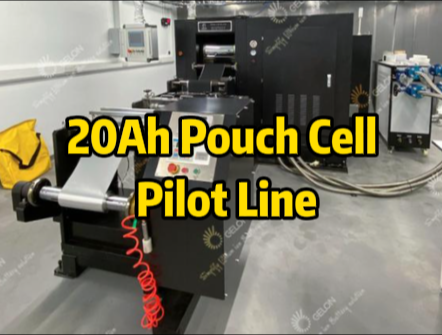
For battery researchers and development teams in Sweden, establishing a robust and repeatable cell fabrication process starts long before scaling up to mass production. The first critical step is a well-designed Pouch Cell Lab Line. This article explains how a laboratory-scale line serves as the indispensable proving ground for materials and processes that will later form the backbone of a Pouch Cell Pilot Line. We will explore the unique requirements of a lab line, how its individual components must work in perfect synergy, and present a real-world case from 2022. In this case, we delivered a fully customized laboratory pouch cell line to a Swedish customer, demonstrating how precise equipment integration enables faster, more reliable process development.
Why a Lab Line Is the True Starting Point for Pilot Line Success
Sweden is home to some of the most advanced battery research and production facilities in Europe. However, even the most sophisticated Pouch Cell Pilot Line cannot perform optimally without first being fed with data and processes validated at the laboratory level.
A Pouch Cell Lab Line is not simply a scaled-down version of a pilot line. It is a dedicated environment designed for flexibility, precision, and rapid iteration. Here, researchers can test new electrode formulations, experiment with different separator materials, and fine-tune process parameters such as coating thickness, drying temperature, and stacking alignment.
The value of a lab line lies in its ability to generate reliable, repeatable data. When these data are later transferred to a Pouch Cell Pilot Line, the scale-up process becomes predictable, reducing material waste and shortening development cycles. In other words, a well-executed lab line directly de-risks the investment in a pilot line.
How a Custom Lab Line Solves Key Development Challenges
For R&D teams in Sweden, the biggest challenge is often not the availability of equipment, but rather the lack of a system that truly fits their specific workflow. Off-the-shelf machines may perform individual tasks, but they rarely integrate seamlessly.
A purpose-built Pouch Cell Lab Line solves this by treating the entire process as a connected workflow. Every piece of equipment is selected and configured to match the customer’s materials, cell design, and process sequence. This approach eliminates compatibility issues and ensures that parameters established on one machine can be directly applied to the next.
For example, if a research team is developing a new high-nickel cathode material, they need a lab line where the coater, cutting machine, and stacking equipment are all calibrated to handle that specific material’s sensitivity to moisture and mechanical stress. A custom lab line provides this level of control, allowing the team to focus on material science rather than equipment troubleshooting.
Key Equipment in a Laboratory Pouch Cell Line: Integration Matters
A functional Pouch Cell Lab Line is defined by how its core components work together. Each machine has a specific role, and their integration determines the overall consistency of the cells produced.
Laboratory Coater
The coater is where the electrode slurry is applied to the current collector foil. In a lab line, the coater must offer precise control over coating thickness, drying zone temperature, and web tension. This precision ensures that the electrode uniformity achieved at this stage can be reliably reproduced in subsequent steps.
Electrode Large Sheet Cutting Machine
After coating, the electrode material is cut into larger sheets. This step may seem simple, but it directly impacts the efficiency of downstream processes. A high-quality cutting machine delivers clean edges without burrs or delamination, preserving the structural integrity of the electrode.
Semi-Automatic Electrode Punching Machine
Once large sheets are prepared, the semi-automatic punching machine cuts the electrodes to the exact dimensions required for the pouch cell design. Accuracy here is critical. Even minor misalignment between the positive and negative electrodes can lead to capacity loss or internal short circuits. When this machine is integrated with the preceding cutting step, the overall dimensional accuracy becomes highly consistent.
Laboratory Semi-Automatic Lamination Machine
For pouch cells, the stacking process determines the internal architecture. The lamination machine aligns the positive electrode, separator, and negative electrode in a precise stack. In a laboratory setting, a semi-automatic machine offers the perfect balance between repeatability and flexibility, allowing researchers to quickly change cell designs without extensive tooling changes.
Automatic Roller Pairing Machine
The final step before cell assembly is applying uniform pressure and heat to the electrode stack. The automatic roller pairing machine ensures that all layers are well-bonded, improving ionic contact and overall cell performance. Consistent pressure across the entire stack is essential for producing cells that perform predictably in electrochemical testing.
When these six components are integrated into a single Pouch Cell Lab Line, the result is a system that produces consistent, high-quality cells while giving researchers full control over every process variable.
Case Study: A Custom Laboratory Pouch Cell Line for a Swedish Customer
In June 2022, we received a custom request from a Swedish customer for laboratory pouch battery manufacturing equipment. This project illustrates how a tailored lab line can meet the exact needs of a sophisticated R&D operation.
The Requirement: The customer provided a detailed brief that called for a line capable of handling their specific material set and process flow. They required a system that was not only precise but also flexible enough to accommodate future material changes.
Our Response: We quickly moved from the brief to a detailed design phase. Our team configured a Pouch Cell Lab Line that matched the customer’s exact process sequence. The equipment package was carefully selected to ensure seamless integration.
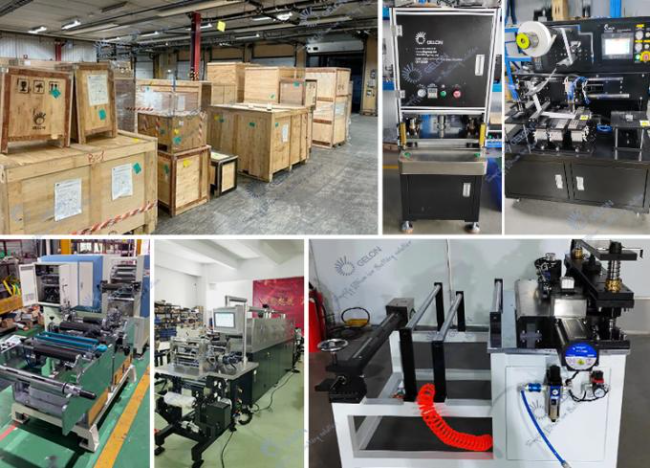
The line included:
- A laboratory coater
- A laboratory semi-automatic lamination machine
- A semi-automatic electrode punching machine
- An electrode large sheet cutting machine
- An automatic roller pairing machine
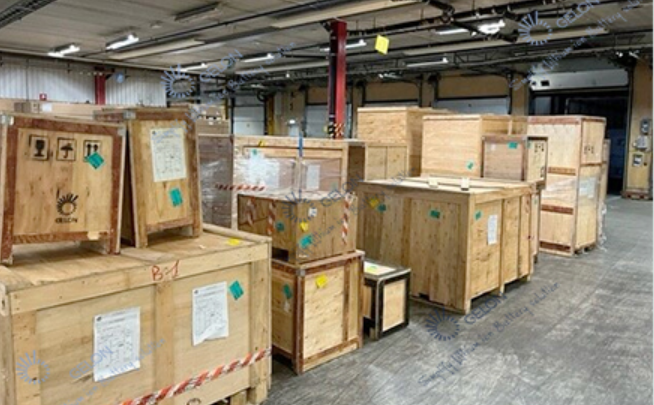
In addition to the core machines, we provided all necessary ancillary materials to ensure the line could begin operation immediately after installation.
The Outcome: We completed packing and shipping by the end of June 2022. Throughout the project, we maintained a focus on professional technology, efficient production, and meticulous service. The customer responded with high recognition and trust, appreciating that we had translated their complex brief into a functional, integrated lab line.
This case demonstrates that a successful Pouch Cell Lab Line is built on understanding the customer’s unique research goals and delivering a system that supports them precisely.
Conclusion: Building a Strong Foundation for Pilot Line Development
For battery researchers and development teams in Sweden, the laboratory line is where innovation begins. It is the environment in which new materials are validated, processes are optimized, and data are generated for scale-up. A well-designed Pouch Cell Lab Line directly contributes to the success of a subsequent Pouch Cell Pilot Line by providing reliable, repeatable baseline data and a proven process flow.
Our mission remains clear: to work alongside our customers to advance lithium-ion battery technology. We aim to simplify battery solutions by delivering precisely the equipment needed, configured exactly to the customer’s process. The Swedish project from 2022 is a reflection of this commitment. Whether you are developing a new chemistry or refining an existing one, a custom laboratory line is the first and most critical investment you can make.
We are ready to be your partner in this work.